Understanding the Basket Hitch: Definition, Benefits, Applications, and Best Practices
Rigging slings can be used in several different hitch configurations. Each configuration affects how the load is supported, controlled, and lifted. In this blog series, we’ll look at some of the most common sling hitches used in the field, including their benefits, limitations, and typical applications. To start, we’ll focus on one of the most widely used rigging configurations: the basket hitch.
What Is a Basket Hitch?
A basket hitch configuration, using wire rope slings, poly round slings, a spreader bar, and shackles.
A basket hitch is a sling configuration where the sling passes under the load and both ends of the sling are connected above the load to the hook, lifting beam, spreader beam, or other approved rigging hardware. Instead of attaching to a single lifting point on the load, the sling cradles the load from underneath.
This makes a basket hitch useful for lifting loads that do not have designated lifting lugs, lifting eyes, or engineered pick points. When properly configured, the basket hitch helps distribute the load across the sling and can provide greater stability than some other hitch types.
A basket hitch may be used with several sling materials, including wire rope slings, chain slings, nylon web slings, and polyester round slings. While each sling material has different advantages and limitations, the basic basket hitch concept remains the same: the sling supports the load from below while both sling ends are lifted from above.
How Does It Work?
In a true basket hitch, the sling legs are vertical and the load is supported evenly between both sides of the sling. When the hitch is used this way, the sling’s rated capacity is typically doubled compared to its vertical rating.
For example, if a sling has a vertical rated capacity of 5,000 pounds, that sling may have a basket hitch capacity of 10,000 pounds when used in a true vertical basket configuration. However, this capacity depends on the sling angle, load balance, sling condition, and the manufacturer’s rated capacity information.
The key phrase is “true basket.” To achieve the full basket hitch rating, both sling legs must remain vertical. This is commonly accomplished by using two crane hooks, a lifting beam, or a spreader beam to keep the sling legs straight up and down. If the sling legs are angled inward, the sling tension increases, and the basket hitch capacity may be reduced
When Should You Use a Basket Hitch?
A basket hitch is often used when the load needs to be supported from underneath rather than lifted from an attachment point. This makes it a practical option for many common rigging applications.
Basket hitches are commonly used to lift:
Pipe
Steel beams
Fabricated components
Bundled materials
Cylindrical loads
Loads without lifting lugs
Equipment that can be safely cradled from below
A basket hitch can be especially helpful when the load shape allows the sling to sit securely beneath the object without slipping, rolling, or shifting during the lift.
Wire rope slings lifting pipe using a basket hitch.
Benefits of Using a Basket Hitch
One of the biggest advantages of a basket hitch is the potential increase in sling capacity when the hitch is used correctly. Because the load is supported by two sling legs, a true vertical basket hitch can double the sling’s vertical rated capacity.
A basket hitch can also improve load control when the sling is properly positioned around the load’s center of gravity. Since the sling cradles the load from underneath, it can help support objects that do not have built-in pick points.
Other benefits of basket hitch rigging include:
Increased capacity in a true vertical basket configuration
Better support for loads without lifting lugs
Versatility across different sling materials
Improved load control when properly balanced
Compatibility with lifting beams, spreader beams, shackles, and other rigging hardware
However, these benefits only apply when the hitch is properly planned and executed. Basket hitches require careful attention to sling angle, load balance, sling protection, and load stability.
Basket Hitch Capacity and Sling Angle
A basket hitch does not automatically double sling capacity in every situation. The full basket hitch rating only applies when the sling legs are vertical.
As the sling angle decreases, tension on each sling leg increases. This added tension can reduce the effective working capacity of the sling and place additional stress on the rigging system. For this reason, riggers must account for sling angle before selecting the sling and rigging hardware.
The lower the sling angle, the greater the tension in the sling legs. If the angle becomes too low, the sling may no longer be suitable for the lift even if the load weight appears to fall within the sling’s vertical rating.
Before using a basket hitch, always verify the sling’s rated capacity for the specific hitch and angle being used. The sling tag, manufacturer’s specifications, and lift plan should guide the final selection. Check out our blog post about the effect of sling angles on capacity for more info on this topic.
Protecting the Slings
One of the most important safety considerations when using a basket hitch is sling protection. Because the sling passes underneath the load, it may come into contact with corners, edges, rough surfaces, or abrasive materials.
Sharp edges can cut into synthetic slings, damage wire rope slings, or create stress points that reduce sling life. Even if an edge does not appear sharp, the force applied during the lift can create enough pressure to damage the sling.
Use proper sling protection when lifting loads with:
Sharp corners
Rough surfaces
Machined edges
Structural steel
Concrete components
Irregular contact points
Sling protectors, wear pads, corner protectors, and other protective devices can help prevent damage and reduce the risk of sling failure during the lift.
What Is a Double Basket Hitch?
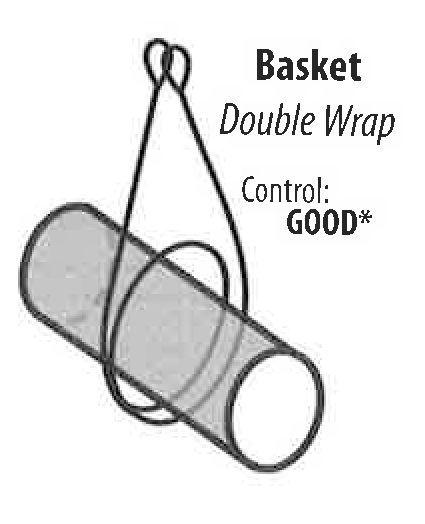
A double basket hitch is a variation of the standard basket hitch where the sling is wrapped around the load twice before lifting. This configuration provides added grip and helps secure loads that may otherwise shift inside a single basket hitch.
A double basket hitch is especially useful for lifting loose or bundled materials, such as pipe. By wrapping the sling around the load twice, the hitch creates more contact with the load and helps prevent the pick point from shifting.
However, a double basket hitch requires additional sling length. Before using this configuration, riggers must confirm that the sling is long enough to wrap the load properly while still maintaining safe sling angles and proper hook or hardware engagement.
In certain applications, using a double basket hitch instead of a single basket hitch can make the difference between a controlled lift and a load that shifts unexpectedly.
Basket Hitch Best Practices
A polyester round sling from LGH
A basket hitch can be an effective rigging method, but only when it is used correctly. Before performing the lift, riggers should confirm that the load is stable, the sling is properly rated, and the hitch is appropriate for the application.
Follow these best practices:
Confirm the weight of the load before selecting the sling.
Check the sling tag for the correct basket hitch capacity.
Keep sling legs vertical whenever possible.
Account for sling angle when the legs are not vertical.
Position the sling around the load’s center of gravity.
Use proper sling protection around edges and corners.
Make sure the load cannot shift, roll, or slide out of the sling.
Inspect all slings and rigging hardware before use.
Use a spreader beam or lifting beam when needed to maintain proper sling angles.
Perform a controlled test lift before moving the load.
A basket hitch should not be used if the load shape, surface condition, or center of gravity could allow the load to slip out of the sling. If the load requires more grip than a standard basket hitch provides, a double basket hitch or a different sling hitch may be more appropriate.
A basket hitch cradles the load from underneath. It is often used when the load needs to be supported rather than gripped. A choker hitch tightens around the load as tension is applied. This makes it useful when the load needs additional control or securement.
In general, a basket hitch can provide higher capacity when used in a true vertical configuration, while a choker hitch reduces sling capacity because of the way the sling bends and tightens around the load. The best choice depends on the load shape, lift points, center of gravity, and how much control is needed during the lift.
Conclusion
A basket hitch is one of the most versatile sling hitch configurations because it cradles the load from underneath and can help lift objects without designated lifting lugs or engineered pick points. When used in a true vertical basket configuration, it can also increase sling capacity compared to a standard vertical hitch, provided the sling legs remain vertical and the setup follows the sling manufacturer’s rated capacity guidelines.
However, one must still plan carefully for a basket hitch. Sling angle, load balance, center of gravity, sling protection, and load stability all affect whether the configuration is safe for the lift. For loose materials or loads that require more grip, a double basket hitch may provide better control. Before selecting any sling hitch, always review the lift plan, inspect the rigging equipment, and confirm that the hitch matches the load and application.
For help choosing the right slings, rigging hardware, lifting beams, or spreader beams for your next lift, contact your local LGH representative or call 800-878-7305.
LGH is North America’s largest single organization devoted exclusively to the provision of lifting and moving equipment for rent. LGH holds the most comprehensive inventory for hoisting, rigging, jacking, pulling, material handling, and safety equipment. With over 90,000 pieces, discover your next project solution at RentLGH.com.