Pre-Lift Plan: What Should It Cover Before a Crane Lift??

A crane lift may only take a short time on site, but the planning behind it can take days or even weeks. Every successful pick depends on decisions made before the crane ever arrives. When important details are missed, delays increase, risks grow, and crews may be forced to solve problems at the most stressful time: lift day.
That is why a pre-lift plan matters.
A pre-lift plan helps crane crews, riggers, contractors, and site teams confirm the load, site conditions, rigging setup, communication plan, environmental factors, and backup options before the lift begins. The goal is simple: identify problems early, reduce uncertainty, and give the crew a clear plan for completing the lift safely and efficiently.
In this blog post, we’ll explain what a pre-lift plan should cover and why early rigging support can help prevent last-minute issues on the jobsite.
What Should a Pre-Lift Plan Cover?

A pre-lift plan should cover the load weight, center of gravity, crane setup, site access, travel path, rigging equipment, sling angles, hardware capacities, crew roles, communication methods, weather conditions, schedule, contingency plans, and final safety checks.
The plan should answer key questions before lift day:
- What is being lifted?
- How much does the load weigh?
- Where is the center of gravity?
- Where will the crane set up?
- How will the load travel from pick point to final placement?
- What rigging equipment is required?
- Who is responsible for each step?
- What could go wrong, and what is the backup plan?
A strong pre-lift plan gives the entire team the same information before the lift begins.
1. Review Site Access and Crane Setup
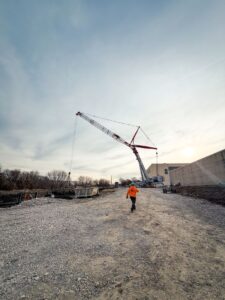
Access is one of the first details that can complicate a crane lift. A site may look workable on paper, but travel paths, ground conditions, obstructions, overhead clearance, staging limitations, or other trades can affect the actual setup.
Before lift day, the team should review:
- Crane access routes
- Load access routes
- Ground conditions
- Overhead obstructions
- Underground utilities
- Staging areas
- Setup space
- Swing radius
- Final load placement
- Site restrictions or active work zones
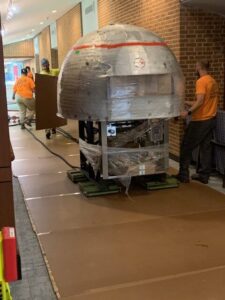
Sometimes the crane can reach the jobsite, but the load cannot be maneuvered into position without specialized equipment. Low-headroom trolleys, center pick beams, spreader bars, dollies, skates, or other rigging solutions may be needed to complete the move.
Identifying these details early helps prevent costly repositioning, downtime, or last-minute rental needs.
2. Verify Load Weight and Center of Gravity
Load information is one of the most important parts of any pre-lift plan. Drawings may be missing, outdated, or incomplete. Equipment may have been modified after manufacturing. A load may appear symmetrical but still lift unevenly.
Before the lift, crews should verify:
- Actual load weight
- Load dimensions
- Center of gravity
- Lifting points
- Rigging attachment locations
- Load stability
- Any modifications that may affect balance
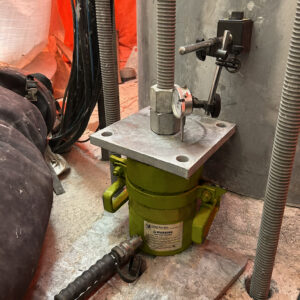
When load data is uncertain, load monitoring equipment such as compression load cells or digital load links can help reduce guesswork. Verifying weight and balance before the lift helps protect the crane, rigging equipment, load, and crew from overload or instability. Check out our blog post to learn more about finding the center of gravity here.
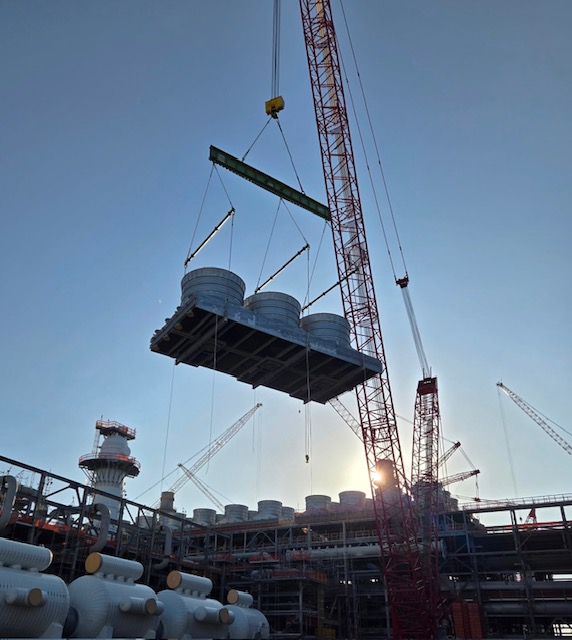
The custom-built 100T X 40 multi-hole bar used on this lift has multiple configurations, allowing it to accommodate all 12 styles of fin fan
3. Build the Rigging Plan
The rigging plan connects the load data to the lift execution. It should identify the equipment, configuration, and hardware required to lift the load safely.
A rigging plan should review:
- Sling type and capacity
- Sling angles
- Shackle sizes and ratings
- Spreader beams or lifting beams
- Hook height and headroom
- Load cells or monitoring equipment
- Pick points
- Hardware compatibility
- Rigging weight
- Load path and final placement
This is also where the team should confirm whether the lift requires specialized equipment. A modular spreader beam, low-headroom lifting beam, center pick beam, or other below-the-hook solution may be needed depending on the load geometry and site conditions.
The rigging plan should account for the full system, not just the load weight. Check out the LGH blog post all about rigging lift plans.
4. Align the Team Before Lift Day
Communication can make the difference between a smooth lift and a stressful one. Crane operators, riggers, signal persons, general contractors, site supervisors, and other involved parties should understand the lift sequence before work begins.
A pre-lift meeting should cover:
- Roles and responsibilities
- Lift sequence
- Communication methods
- Hand signals or radio channels
- Stop-work authority
- Exclusion zones
- Site access restrictions
- Changes since the original plan
- Emergency procedures
When everyone works from the same plan, crews can move more confidently and avoid confusion during the lift.
5. Check Weather, Environment, and Schedule
Environmental conditions can change the lift plan quickly. Wind, rain, lightning, temperature, poor visibility, and changing ground conditions can all affect the safety and timing of a crane lift.
Before lift day, the team should review:
- Weather forecast
- Wind conditions
- Ground stability
- Lighting and visibility
- Nearby structures or power lines
- Other trades working in the area
- Delivery schedules
- Site access windows
- Traffic or road restrictions
Scheduling also matters. A lift may depend on material delivery, site shutdown windows, trade coordination, or limited crane access. Confirming the schedule ahead of time helps prevent delays once equipment and crews are already on site.
6. Prepare Contingency Plans
Even a well-planned lift can face unexpected changes. Weather delays, access issues, equipment substitutions, inaccurate load information, or site conflicts can appear without warning.
A strong pre-lift plan should include “what if” scenarios, such as:
- What if weather conditions change?
- What if the crane cannot access the planned setup area?
- What if the load weight is different than expected?
- What if the center of gravity is offset?
- What if the required rigging is unavailable?
- What if another trade blocks the lift path?
- What if the lift needs to pause mid-sequence?
Backup rigging, alternate lift sequences, additional pick points, or replacement equipment can help turn a major delay into a manageable adjustment.

7. Complete a Final Safety Walkthrough
Before the lift begins, the crew should complete a final walkthrough. This step confirms that the plan still matches the actual jobsite conditions.
The final walkthrough should verify:
- Crane setup
- Ground conditions
- Rigging equipment
- Load attachment points
- Sling angles
- Hardware condition
- Load path clearance
- Landing area
- Communication methods
- Exclusion zones
- Escape routes
- Weather conditions
- Any changes from the original plan
If anything has changed, the team should stop and update the plan before lifting.
Pre-Lift Planning Checklist

Use this checklist as a quick reference before lift day:
Site and Crane Setup
- Confirm crane access and setup location.
- Check travel paths for the crane and load.
- Identify obstructions, soft ground, overhead restrictions, and staging limits.
- Confirm whether special gear is needed for access or placement.
Load Weight and Balance
- Review drawings, specifications, and known load data.
- Confirm actual load weight when possible.
- Identify the center of gravity.
- Review lifting points and load stability.
- Use load cells or digital load links when weight or balance is uncertain.
Rigging Plan
- Select proper slings, shackles, beams, and hardware.
- Check sling angles and hardware capacities.
- Confirm hook height and headroom.
- Account for rigging weight.
- Review whether spreader beams, lifting beams, or low-headroom equipment are required.
Team Communication
- Hold a pre-lift meeting.
- Assign roles and responsibilities.
- Confirm hand signals or radio communication.
- Review stop-work authority.
- Confirm the lift sequence with all involved parties.
Environment and Schedule
- Monitor weather and wind.
- Review site conditions.
- Coordinate timing with other trades.
- Confirm delivery schedules, shutdown windows, and access restrictions.
Contingency Planning
- Prepare for weather delays.
- Identify backup rigging options.
- Plan for access restrictions or equipment substitutions.
- Review alternate lift sequences.
- Confirm who approves changes to the lift plan.
Final Walkthrough
- Inspect all rigging equipment.
- Walk the load path.
- Confirm clearance and landing area.
- Verify exclusion zones and escape routes.
- Stop and update the plan if conditions have changed.
How LGH Supports Pre-Lift Planning

This steam duct lift was made possible by the pre-lift rigging configuration plan from LGH.
Crane companies know that planning matters, but complex lifts can still create challenges. Tight access, limited headroom, unusual load geometry, unknown load weight, or changing site conditions can all affect the lift plan.
LGH works with crane crews and contractors to help identify those challenges early. Our rental specialists can help review the application, recommend rigging equipment, and provide the hoisting, rigging, jacking, pulling, material handling, and safety equipment needed to support the job.
From modular spreader beams and lifting beams to load cells, digital load links, shackles, slings, dollies, skates, and low-headroom solutions, LGH helps crews prepare for lift day before the crane ever leaves the yard.
Learn more about the Rigging Lift Plan services that LGH offers here.
Conclusion
A pre-lift plan should do more than outline the basic lift sequence. It should confirm the load, site conditions, crane setup, rigging plan, crew communication, environmental factors, contingencies, and final safety checks.
When these details are reviewed early, crane lifts become more controlled, predictable, and efficient. Crews know what to expect, equipment is selected for the actual job, and surprises are reduced before lift day begins.
For help selecting the right rigging equipment for your next crane lift, contact LGH today or call 800-878-7305 to speak with a rental specialist.
LGH is North America’s largest single organization devoted exclusively to the provision of lifting and moving equipment for rent. LGH holds the most comprehensive inventory for hoisting, rigging, jacking, pulling, material handling, and safety equipment. With over 90,000 pieces of equipment, discover your next project solution at RentLGH.com.