Learn How to Choose the Right Machinery Moving Skate For Your Project
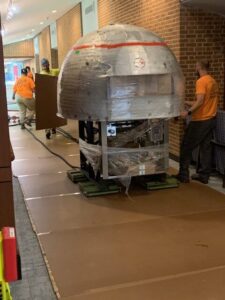
LGH air skates used to move a pizza oven into a retirement home.
You may not be able to compete in the Winter Olympics with machinery moving skates, but they can help heavy equipment glide from one place to the next.
Moving large machinery, fabricated structures, industrial components, and sensitive equipment through a facility isn’t always as simple as picking the load with a forklift or crane. Tight spaces, finished floors, limited overhead access, load size, and path of travel can all influence how equipment needs to be moved.
Machinery moving skates, also called rigging skates, provides another option for moving and positioning heavy loads with control.
In this guide, we’ll break down how each type works, where it excels, and what to consider when choosing the right skate for your job.
What Are Machinery Moving Skates?
Machinery moving skates are load-moving systems designed to transport or position heavy equipment across a surface. Depending on the type, they may use rollers, rotating casters, compressed air, or powered transport technology to move the load.
While each type operates differently, machinery moving skates generally provide a low-profile way to move loads when traditional material handling equipment may not be the best fit. The right skate system depends on several factors, including the weight and size of the loads, floor conditions, available clearance, path of travel, and how precisely the equipment needs to be positioned.
Some skates are designed primarily for straightforward moves, while other types provide 360-degree maneuverability or powered movement. Understanding those differences is key to choosing the right equipment for the job.
Why Use Skates to Transport Heavy Machinery Over Other Methods?
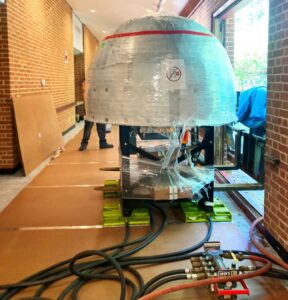
LGH crazy skates moving a hyperbaric chamber.
Forklifts, cranes, and other material handling tools can be highly effective ways to move heavy loads. However, the conditions of a particular job may call for a different approach.
Machinery moving skates can be especially helpful when overhead clearance is limited, forklift or crane access is restricted, or a load needs to travel through a tight facility. Depending on the type of skates, they can also navigate tight turns or help crews make precise adjustments during final positioning.
For example, air skates may be considered when moving vibration-sensitive equipment or when distributing the load across a larger surface area is beneficial. A robot skate, on the other hand, may be better suited for applications where powered, remote-controlled movement is an advantage.
Ultimately, machinery moving skates are another innovative tool in the rigging toolbox, which gives crews additional options when load size, access, floor conditions, or the path of travel make a conventional approach less practical.
4 Types of Skates LGH Offers for Rent
LGH offers several skate systems to accommodate different load sizes, movement requirements, and jobsite conditions. Here’s how the four options in our rental fleet compare.
1. Machine Skates
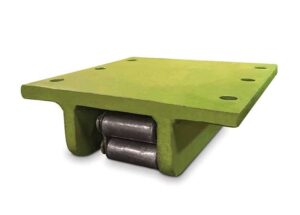
Standard machine skates provide a simple, low-profile solution for rolling heavy loads. LGH carries Hillman Rollers, which feature an infinite chain design. Rigid models are well suited to straight-line travel, while swivel configurations provide additional steering capability. These rigging skates are portable, efficient, and well suited for moves where the travel route is clear and predictable.
Features:
Low overall height enables easy positioning under load
Less force to move with low-friction design
Hardened steel construction
Capacities range from 3.75 tons to 100 tons
Options include rigid skates for straight-line movement and swivel skates for precise turning
Designed for indoor and outdoor use
Applications Where Machine Skates Excel:
Industrial machine movers
Small machinery
Large equipment
Bridges and buildings
When to Consider a Different Option:
For moves that require frequent direction changes, tight turns, or increased maneuverability, rotating machine skates may provide better control.
2. Air Skates
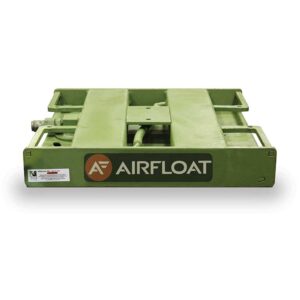
Air skates, also known as air casters, air skids, air caster skids, air dollies, or air bearing systems, use compressed air to create a thin cushion of air beneath the load, allowing heavy equipment to “float” across a suitable floor surface. Because they provide low-friction, omnidirectional movement while distributing the load over a larger area, air skates are particularly useful for moving heavy, delicate, or vibration-sensitive equipment. Read more about air skates in this LGH blog post.
Features:
Compressed air creates a thin air cushion beneath the load
Easy, omnidirectional movement
Capacities range from 25,000 to 315,000 lbs
Control package with on/off valves
Durable hoses with quick disconnects
Applications Where Air Skates Excel:
Positioning large, fabricated structures
Moving vibration-sensitive equipment
Unloading or positioning large vessels
Relocating equipment in tight or confined spaces
Supporting heavy-haul and rigging applications inside facilities
When to Consider a Different Option:
Air skates require the right operating conditions to perform effectively, including a suitable floor surface and access to an adequate compressed-air supply. If those conditions aren’t available, or if the travel path includes surfaces that aren’t suitable for an air bearing system, a wheeled or powered skate may be a better option.
When the path from one point to the next isn’t a straight line, rotating machine skates offer greater flexibility. Also known as crazy skates, their 360-degree rotating caster design allows crews to turn, steer, and reposition heavy loads. Crazy skates provide greater control when navigating tight spaces or making precise adjustments during final placement.
If a load only needs to travel along a simple, straight path, a traditional machine skate may offer a simpler solution. For loads requiring low-friction movement, different floor-loading capacities, or powered transport, air skates or a robot skate system may be a better fit.
4. Robot Skates
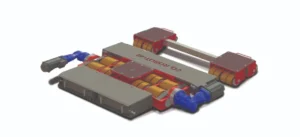
Robot skates take an alternative approach to machinery moving by combining powered transport with remote-controlled operation. This battery-powered transport system enables one person to move a load of up to 46 tons with just their fingertips, reducing the manual force required to move and position heavy equipment.
With remote operation, low loading height, and controlled travel speeds, robot skates are useful for heavy machinery moves where control, maneuverability, and powered movement are priorities.
Features:
Remote-controlled operation
Powered by lithium-ion battery technology
46-ton capacity
Low loading height of 9.8 inches
Movement speed of up to 20 feet per minute
Applications Where Robot Skates Excel:
Moving heavy machinery and industrial equipment
Machinery installation and relocation
Moving loads through facilities with limited access
Applications requiring powered movement
Moves requiring controlled, precise positioning
Transporting heavy equipment over longer travel paths within a facility
When to Consider a Different Option:
For more straightforward moves where manual load movement is practical, traditional machine skates may provide a simpler solution. Floor conditions, available clearance, load configuration, and the required path of travel should also be evaluated before selecting a robot skate system.
Which Machinery Moving SkateIs Right for Your Application?
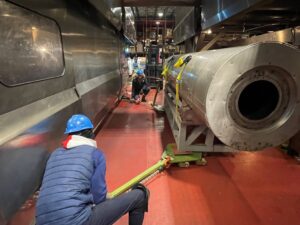
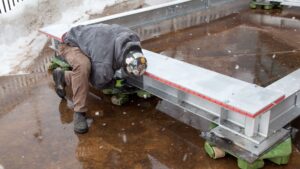
Rotating machine skates used to position heavy load into place.
Choosing the right machinery moving skate starts with understanding the load and the environment where it needs to move.
Before selecting a skate system, ask:
How much does the load weigh?
What are the floor conditions?
Does the load need to travel in a straight line or change direction?
Does it need to rotate?
Are there tight turns or obstacles along the path?
How precise does final positioning need to be?
Is overhead or forklift access limited?
Is the equipment vibration-sensitive?
Is compressed air available?
Would powered movement benefit the application?
Consider machine skates when the move follows a relatively straightforward path and a simple, low-profile rolling solution fits the application.
When the load needs to turn, rotate, navigate a complex path, or be precisely positioned, rotating machine skates may be the best fit.
Air skates may be your best bet when low-friction, omnidirectional movement is beneficial, the load is fragile or vibration sensitive, and the facility has suitable floor conditions with compressed-air availability.
Consider robot skates when powered, remote-controlled movement would benefit the machinery move, particularly with heavy equipment or applications requiring controlled positioning.
What Else Do You Need for a Machinery Move?
Choosing the right skate is an essential part of planning a machinery move. Crews also need to consider how the load will be raised onto the skates, how it will be controlled during movement, and unloading once the machinery arrives at its destination.
LGH electric dolly power bar, part of the dolly system.
LGH rental specialists can review the load weight, center of gravity, floor conditions, travel path, turning requirements, and load-control needs to help identify the equipment required for the complete move.
Find the Right Machinery Moving Skates for Your Next Move
From simple machinery relocations to moves involving sensitive equipment or heavy loads, the right skate system depends on the demands of the application.
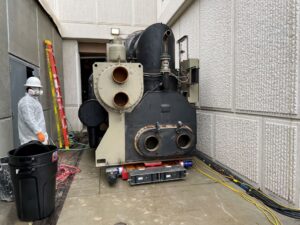
LGH robot skates used to move heavy machinery.
LGH offers machine skates, air skates, rotating machine skates, and robot skates for rent, along with the additional rigging and material handling equipment needed to support the move. Our rental specialists can help you evaluate your application and identify the equipment that best fits the job.
Explore our machinery moving equipment and contact LGH to discuss your next project.
Machinery Moving Skates FAQ
Q: What are machinery moving skates?
Machinery moving skates are load-moving systems used to transport and position heavy equipment. Depending on the type, they either use rollers, rotating casters, compressed air, or powered transport technology to move the load. Typical applications include machinery relocation, equipment installation, plant maintenance, and other applications where heavy loads need to be moved with control.
Q: What kind of machinery moving skates does LGH rent?
LGH rents four types of machinery moving skates: standard machine skates for straightforward moves, air skates for low-friction and omnidirectional movement, rotating machine skates (also known as crazy skates) for 360-maneuverability, and robot skates for remote-controlled movement.
Q: How do you determine which machinery moving skate system is right for the job?
The right skate depends on your load and the conditions of the move. Important factors include load weight and dimensions, center of gravity, floor conditions, available clearance, path of travel, turning requirements, and how precisely the load needs to be positioned. Straight-line machine skates may work well for a direct travel path, while rotating machine skates provide greater maneuverability for turns and tight spaces. Air skates offer low-friction, omnidirectional movement on suitable surfaces, while robot skates provide powered, remote-controlled movement.
Q: How much weight can machinery moving skates handle?
Capacity varies by the type of rigging skate and model. LGH’s rental fleet includes options for a wide range of load weights, from smaller machinery moves to systems capable of transporting extremely heavy equipment. You need to know the total load weight and how that weight will be distributed when selecting a rigging skate system.
Q: What equipment may be needed in addition to machinery moving skates?
Depending on the application, additional equipment may be needed to raise the load onto the skates, control it during travel, and position it at its destination. This could include jacks, hoists, holdbacks, tiebacks, and other rigging or material handling equipment. LGH rental specialists can help identify the equipment required to complete the move.
Q: What information should I have before requesting a quote for machinery moving skates?
Before contacting us, gather as much information as possible about the load and travel path. Helpful details include the load weight and dimensions, center of gravity, floor conditions, available clearance, distance of travel, turns or obstacles along the route, and final positioning requirements. The more information available about the move, the better we can help determine the best rigging solution.
LGH is North America’s largest single organization devoted exclusively to the provision of lifting and moving equipment for rent. LGH holds the most comprehensive inventory for hoisting, rigging, jacking, pulling, material handling, and safety equipment. With over 90,000 pieces of equipment, discover your next project solution at RentLGH.ca.